Advancing precision approaches to prevent and treat chronic post-surgical pain.
Each year, millions of people undergo surgery. While most recover fully, some continue to experience pain long after their surgical incisions have healed.
This condition — called chronic post-surgical pain (CPSP) — affects more than 1 in 10 surgical patients.
CPSP can interfere with work, sleep, daily activities, and emotional well-being. Not everyone experiences this pain in the same way, and researchers are still working to understand why some people develop long-term pain while others recover fully.
CPSP can occur after many types of procedures, and is more common after:
- Breast surgery
- Heart or lung surgery
- Abdominal surgery
- Certain orthopedic surgeries
About the IMPETUS Study
The Integrated Mechanisms, Phenotypes, and Translational Underpinnings of Chronic Pain after Surgery (IMPETUS) study aims to better understand the biological, psychological, and lifestyle factors that contribute to chronic post-surgical pain — with the ultimate goal of improving prevention and treatment.
Because every patient’s pain experience is different, one of the study’s main goals is to identify distinct phenotypes of:
- Pain symptoms
- Sensory function
- Immune system activity
- Cognitive function
- Behavioral and lifestyle factors
Researchers use advanced statistical and machine learning approaches to analyze detailed data from:
- Individuals who developed chronic post-surgical pain
- Individuals who had similar surgeries but recovered without long-term pain
By comparing these groups, the team can identify factors that may uniquely contribute to persistent pain.
Advancing Research Through Integrated Models
To deepen understanding and accelerate discovery, IMPETUS investigators also study chronic post-surgical pain using a mouse model.
Studying mechanisms in both humans and laboratory models helps:
- Validate biological findings
- Identify new therapeutic targets
- Translate discoveries more quickly into patient care
Ultimately, this integrated research approach aims to develop more precise, personalized treatments for patients who are at risk of — or already experiencing — chronic post-surgical pain.
IMPETUS Clinical Study
IMPETUS is an observational research study, meaning it does not test a new treatment or change participants’ medical care. Instead, researchers carefully measure and observe many aspects of health to better understand patterns associated with chronic post-surgical pain.
The study enrolls adults who:
- Underwent major abdominal or genitourinary surgery within the past 3 years
- Either:
- Developed chronic pain related to their surgery
- Recovered without long-term pain
By studying these groups, researchers can better understand why chronic pain develops in some individuals but not others.
One In-Person Visit
Participants complete a one-time visit that includes:
- Questionnaires about pain, mood, sleep, and daily functioning
- Brief thinking and memory tasks
- Sensory testing to assess how the body processes pain, temperature, and touch
- A blood sample
- Two small (3 mm) skin biopsy samples near the surgical incision to evaluate nerve and immune function
30 Days of Remote Monitoring
After the visit, participants:
- Complete brief smartphone-based surveys
- Wear an activity monitor
This remote portion lasts 30 days and helps track:
- Pain levels
- Sleep
- Physical activity
- Daily functioning
Have questions or want to learn more?
Email the IMPETUS Study Team: freyk@wustl.edu
Meet the Investigative Team
Principal Investigators

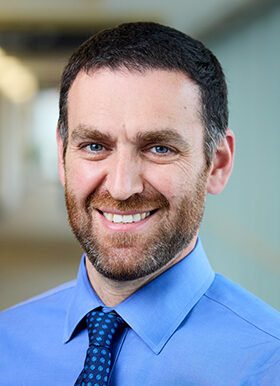
Simon Haroutounian, PhD, MSc
Professor, Anesthesiology
Patient Location: Center for Advanced Medicine
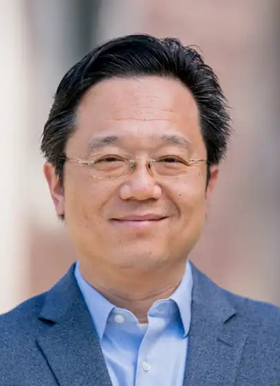
Chenyang Lu, PhD
Fullgraf Professor of Computer Science & Engineering, Anesthesiology, Medicine, Neurosurgery, Public Health
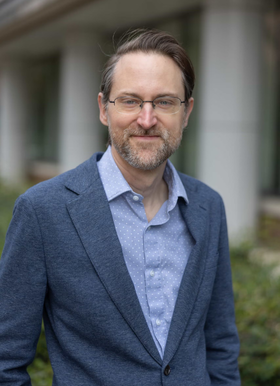
Thomas Rodebaugh, PhD
Professor, Psychology and Neuroscience
University of North Carolina at Chapel Hill
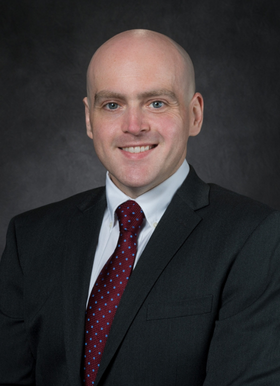
Co-Investigators
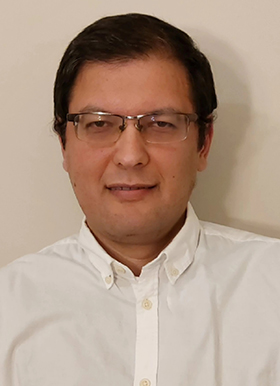

Ryan Bogdan, PhD
William R. Stuckenberg Professor in Human Values and Moral Development
WashU Arts & Sciences

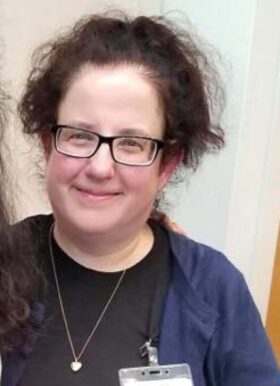
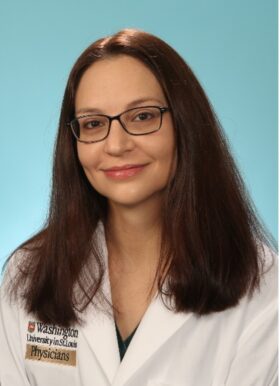

Denise Head, PhD
Professor of Psychological & Brain Sciences; Associate Chair of Psychological & Brain Sciences; Associate Professor in Radiology
WashU Arts & Sciences

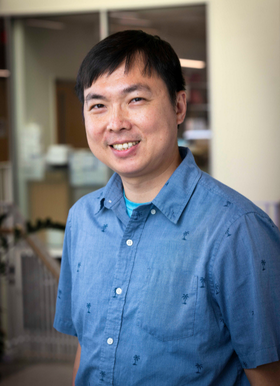
Sheng Chih (Peter) Jin, PhD Jin, PhD
Assistant Professor of Genetics and Pediatrics
WashU Medicine Genetics

Thomas Kannampallil, PhD, FACMI, FAMIA
Associate Professor of Anesthesiology; Assistant Dean for Data Science; Chief Data Scientist for WashU Medicine